Tuesday, November 6, 2007

Dagbok East India Trading Company

map 1749 China + East Asia


turtle


sea bug + tropical fish


sea bug (detail)


stylised sharks and fish


2 sailing ships


long boat + Chinese junk


Chinese junk (detail)


sea creatures


stylised flying fish and other fish


Cadiz map + sea shell + urchin


sailing ship + tropical fruit


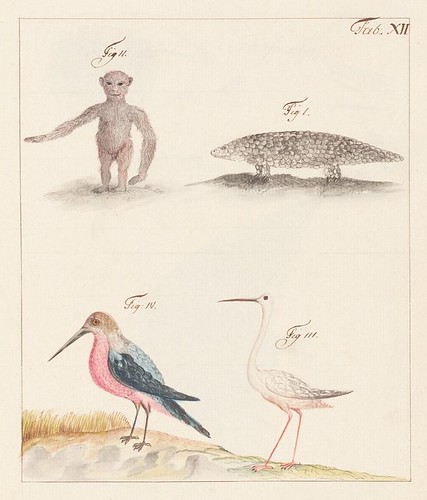
Asian birds and stylised whale


birds and stylised animals


stylised ape (detail)


Chinese people


Asian nobleman and attendants


2 paintings - lighthouse and dock


Click to enlarge. Black bordered details were spliced from screencaps and almost all of the images have been cleansed. A bit.


The Swedish East India Company was formed under Royal Charter in 1731 and granted exclusive national trading rights with Asia, mostly through the port of Canton ( near Hong Kong). Round-trip voyages from the company's headquarters in Göteborg took around eighteen months and the major commodities transported back were tea, silk, porcelain and spices.

In all, there were 127 voyages undertaken prior to the company's becoming insolvent in 1813 due to reduced profits during the Napoleonic years. Eight major sailing vessels were either lost or partially destroyed while the company was operating, including the 'Götheborg', which famously sank on return to the harbour in Göteborg in 1745. In the 1990s, marine archaeologists were able to salvage some of the original ship, and after a ten year rebuilding project, a to-scale replica undertook a nineteen month voyage from Sweden to China and back, returning to Göteborg in June 2007.

The images above come from the diary of a cartographer (Carl Johan Gethe) on board the 'Götha Leyon', which left Sweden on a three year trading expedition in 1746. There is very little I can find about this particular voyage saving to note that a pupil of Carolus Linneaus, Carl Gustav Ekberg*, was the Ship's Surgeon and functioned as an amateur naturalist. One of the maps seen above is of the port of Cadiz in Spain, where ships stopped to trade merchandise for Spanish silver coins which they then used to purchase goods in China.

Gethe's diary ('Dagbok') (title: 'Dagbok hållen på resan till Ost Indien begynt den 18 octobr: 1746 och slutad den 20 juni 1749') is one of two diaries from crew members on the same voyage which are hosted by the National Library of Sweden. Although fairly similar, I think the quality of the watercolour sketches in Gethe's book is superior. The illustrations are elegant and beautifully colourful, if at times a little unsophisticated.

Sunday, November 4, 2007

Duke Dress and Heraldry

Court book of Bavarian Dukes


Court book of Bavarian Dukes


Court book of Bavarian Dukes


Court book of Bavarian Dukes


Court book of Bavarian Dukes


Court book of Bavarian Dukes


Court book of Bavarian Dukes


Court book of Bavarian Dukes


Court book of Bavarian Dukes


ring of Coats of Arms


Court book of Bavarian Dukes


Court book of Bavarian Dukes


Court book of Bavarian Dukes


Court book of Bavarian Dukes


Court book of Bavarian Dukes


Court book of Bavarian Dukes

[click the images for enlarged views]


This combined 'hofkleiderbuch' and 'wappenbuch' (Court dress and coats of arms book) was produced in 16th century Bavaria (sometime after 1588, judging by a date visible on one of the manuscript pages).

The (paper) book depicts members of the nobility and heraldic insignia from the Royal Courts of William IV (Wilhelm) and Albert V (Albrecht), 16th century Bavarian Dukes from the House of Wittelsbach.

'Hofkleiderbuch (Abbildung und Beschreibung der Hof-Livreen) des Herzogs Wilhelm IV. und Albrecht V. 1508-1551. Wappen mit Reimsprüchen des Holland. Abbildungen bayerischer Regenten' was recently uploaded by the Bavarian State Library. [click on 'Miniaturansicht']

There is a small amount of information on this translated page about the restoration of the book earlier this year.

Just prior to posting this entry I discovered a related but much longer book, also at the Bavarian State Library, and almost identically titled to the present 'Hofkleiderbuch'. I had a quick scan (and will return to it sometime in the future: update: done!) and it contains exclusively full page watercolour images of the same Royal Court members - it would no doubt be a good resource for period costumes.

Friday, November 2, 2007

Minimalism

image no.  2404


image no.  2418


image no.  2429


image no.  2439.1


image no.  2440.2


image no.  2443.1


image no.  2444.2


image no.  2450.1


image no.  2457.1


image no.  2571


image no.  2669


image no.  2673


image no.  2680


image no.  2683


image no.  2730


image no.  2736


image no.  2746


image no.  2787


image no.  2916


image no.  2917


image no.  2952


Every so often I like to strap on an oxygen tank and go archive diving into the depths of the German Natural History Museum sifting through the extensive legacy of the renowned microscopist, Christian Gottfried Ehrenberg. Beyond his published works, some of which have been featured here previously (see below), three thousand of Ehrenberg's original illustrations have been saved and digitised in high resolution format - but the material is only available as very large image files.

I can't believe it has taken me this long to develop a new downloading trick -- I start off eight or ten random file downloads (it's essentially blind fishing) and then keep an eye on the thumbnails that appear in the target folder. These mini-images tend to be visible immediately after the download commences. That way I can quickly terminate any in the queue that, for one reason or another, aren't as desirable. [... a 'note to self' for the future]

Despite this hallelujah revelation, I probably downloaded half a gigabyte of data by taking a cross section sampling from only six hundred out of the three thousand drawings available. (for anyone mad keen enough to pursue this themselves, the alt-tags for the above images note the file number - they all come from the series 2400-3013) [German Natural History Museum - Ehrenberg downloads] {by the way: just in case you are anything like me and you were hoping to cheat, the 'interesting' in the 'interesting drawings list.txt' does not seem to include 'exceptional visual quality' as one of its selection criteria}

Image dates on the sketch pages seem to be mostly from the 1830s, although there are a couple from the 1880s.

For more information about Ehrenberg and (more images from) his seminal contributions to the worlds of microgeology, micropaleontology, rotifera, radiolaria and diatoms, see in order:
All of the above images were reduced in size by about two thirds (they are still roughly 2000 x 1500px) and uploaded to Webshots - the Webshots album has more than twenty further images in addition to those you see here.